
Key Takeaways:
Analogue Film Wedding Photography: A Timeless Art
When we look at our parents’ or grandparents’ wedding albums, we immediately notice a unique visual weight in those images. The colors feel grounded in reality, the dark tones give a rich, deep contrast to each frame, and the grain brings a tangible, organic texture to the image. A slight blur in certain photographs is entirely acceptable, lending them an ethereal touch. Ultimately, it yields a natural, organic, and living imperfection.
In an era dominated by instant digital gratification, along with the widespread use and abuse of fleeting social media filters, analogue film is making a powerful return to modern weddings.
My philosophy at Boris the Cat – Wedding Photography is clear: photographing your wedding is an opportunity to treat this family milestone not as a production set, but as a chance to build an authentic and genuine visual legacy that will endure for generations to come. Given its unique character, film photography is the ideal medium and tool to achieve this goal.
The Hybrid Balance: Digital Security with Film Texture
Let’s be practical. Covering a dynamic event of immense responsibility exclusively on film is a risk no modern couple should take. Moments happen in fractions of a second, and lighting conditions shift instantly.
To give you complete peace of mind, when we work with analogue photographic film, we operate within a very well-defined hybrid framework.
Around 85% to 90% of the wedding day is recorded using state-of-the-art digital systems, ensuring that every unexpected hug, every tear of joy, and the quick glances during the ceremony, as well as the energy on the dance floor, are safeguarded with technical and artistic precision.
The remaining 10% to 15% of the work is dedicated to analogue. We introduce our film cameras at specific, well-planned chapters of the day, such as:
A Five-Camera Toolset for a Single Wedding Day
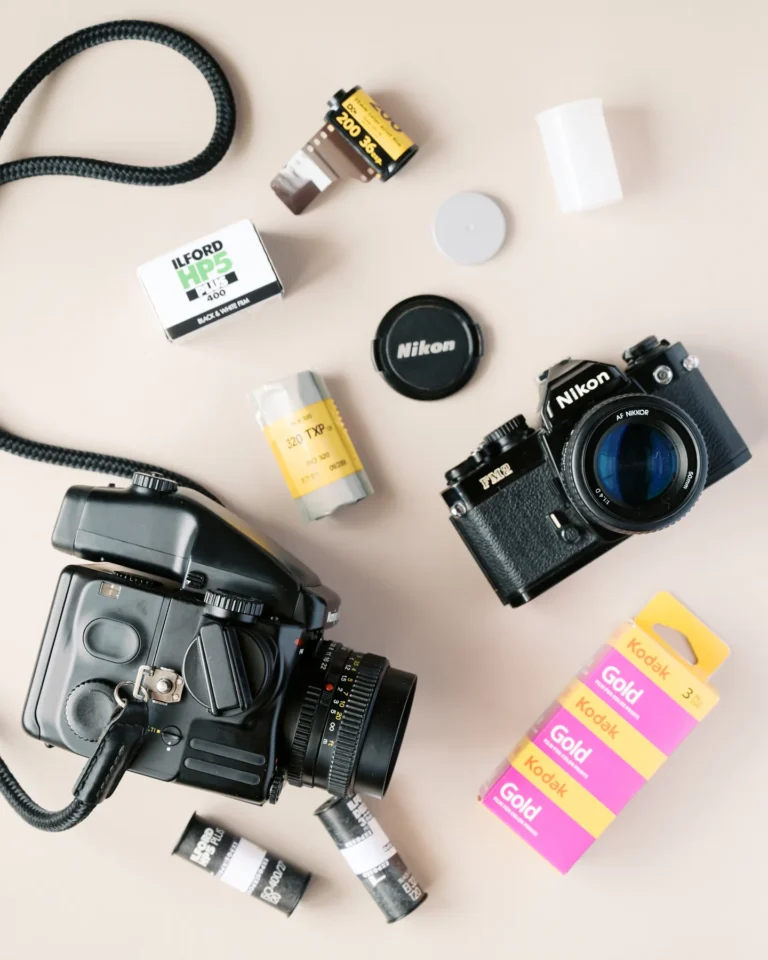
When we step into your wedding venue, we bring along a true festival of cameras and lenses. Managing this volume of equipment requires years of experience, but it allows us to work completely invisibly, without disrupting the rhythm of your day.
During the wedding, I operate with at least five distinct cameras:
The Choice of Film Stocks: Portra, Gold, Tri-X, and HP5
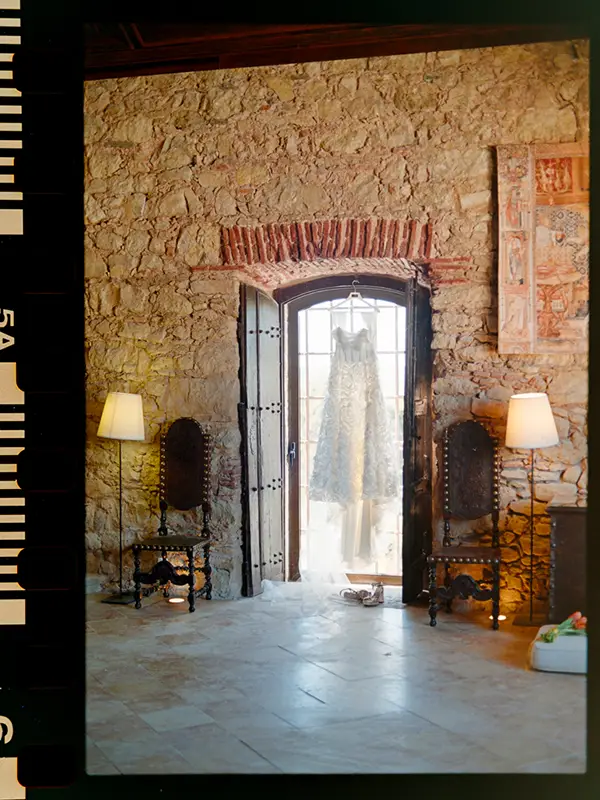
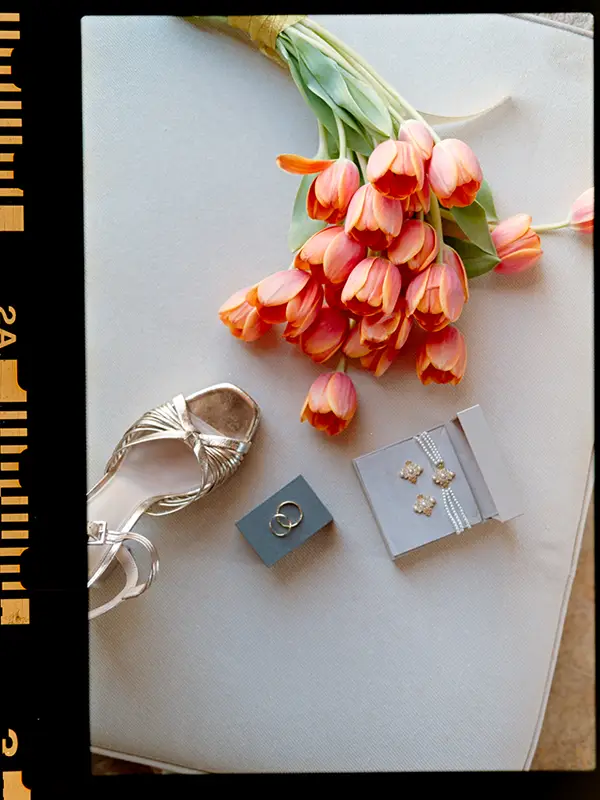
Kodak Portra is currently my color film of choice. The way this film processes skin tones has a subtlety and truth that digital files try to recreate, with little success, even after hours of editing. Unfortunately, my all-time favorite film, Fuji 400H, was permanently discontinued, making Portra our primary ally for all lighting conditions (both indoors and outdoors), especially during sun-drenched days in Portugal.
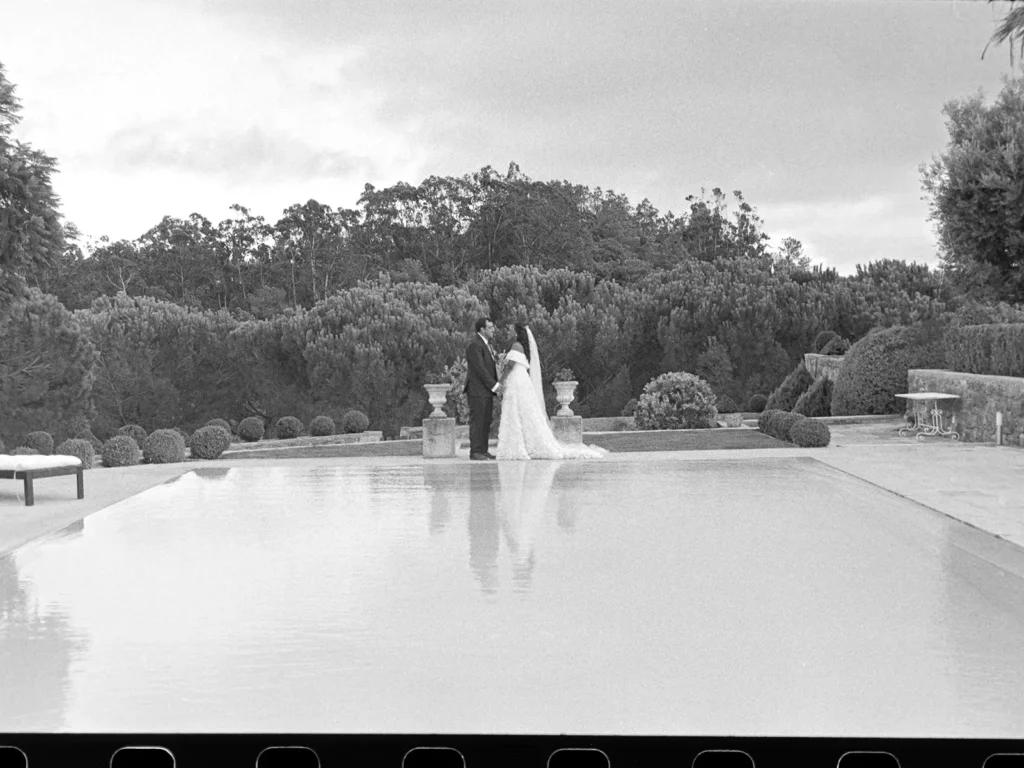
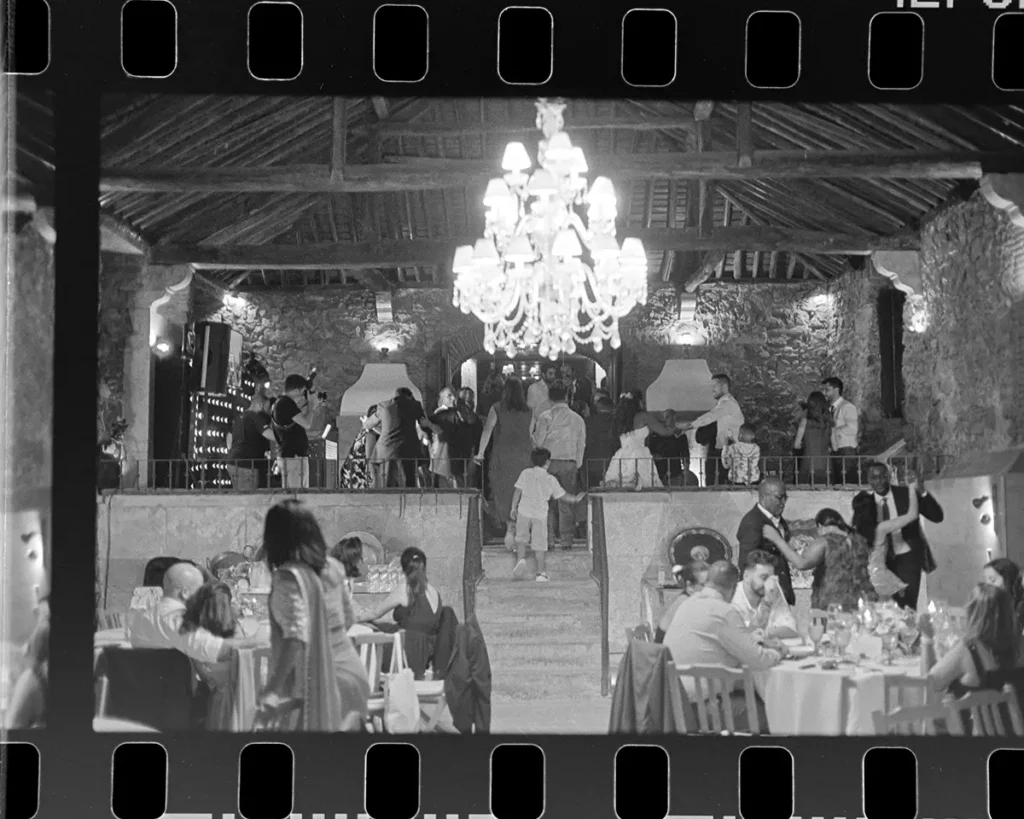
For black and white work, I trust entirely in Kodak Tri-X.
It is a film stock that delivers remarkably rich blacks and a subtle range of grays with a highly graphic character. By stripping away the distraction of color, it exposes only the gesture, composition, light, and raw emotion of the moment.
For late afternoons, I never go without my faithful companion, Kodak Gold. It is a film with a very distinct character, featuring warm, saturated tones and an impressive grain structure. Perfect for accentuating the tones of the golden hour!
For moments when the light begins to fade, Ilford HP5 offers us the flexibility we need in an unmatched black and white film. Deep blacks and bright whites give this film a character that is impossible to replicate digitally.
Why Developing Every Single Roll by Hand is a Non-Negotiable Commitment
Here lies our greatest distinction in safeguarding your story. The vast majority of modern photographers offering analogue film wedding photography services simply mail their rolls to high-volume industrial labs. The development process, while not complex, requires a great deal of time and dedication.
But I work differently. When I began my career as a photographer in 1997, I simultaneously learned the entire chemical development process for film and photographic papers. I realized back then that with the right combinations of films, chemicals, development times, and temperatures, I could achieve far more satisfying results, offering greater control and security for my clients.
Nowadays, commercial labs have changed significantly, and the master technicians of the past have practically disappeared. Entrusting unrepeatable wedding memories to an automated factory process is, for us, an unnecessary risk.
I chose to take the opposite path. I develop every single roll of color and black and white film artisanally myself in my own workspace. By controlling chemical temperatures, development times, and frame-by-frame professional scanning, I eliminate the typical accidents of industrial production. It is slow and meticulous work, but it is the only method that guarantees the standard of security and excellence to which I have always accustomed my clients.
If you want to better understand the rigor I put into preserving your visual heritage, I invite you to read our story.
Managing the Harsh Portuguese Sun and Light Logistics
If you are organizing a destination wedding in regions like the Algarve, Lisbon, Sintra, or the Douro, light is your greatest canvas and your biggest challenge. In the summer, temperatures frequently exceed 35°C (95°F), and the midday sun creates violent contrasts, with deep shadows and blown-out highlights.
Digital sensors suffer in these extreme environments, often losing the fine details of the wedding gown when a photographer’s technique is limited, or generating artificial skin tones due to the intensity of direct light.
Analogue film behaves exemplarily under these conditions. The film has a massive exposure latitude, which means it retains highlight details and softens transitions even under the blazing July sun.
Whether we are on the coastline of Cascais or facing the filtered, mystical light of the Sintra mountains, our technical approach adapts to the space naturally, without the need for heavy flashes that break the ambiance of your reception.
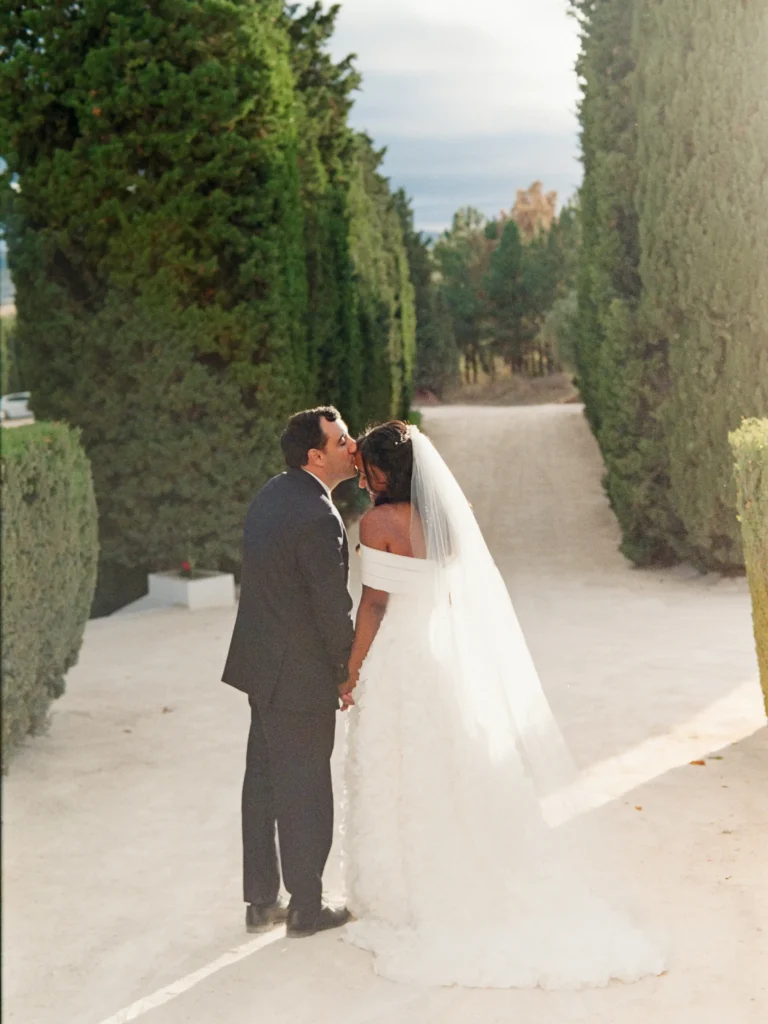
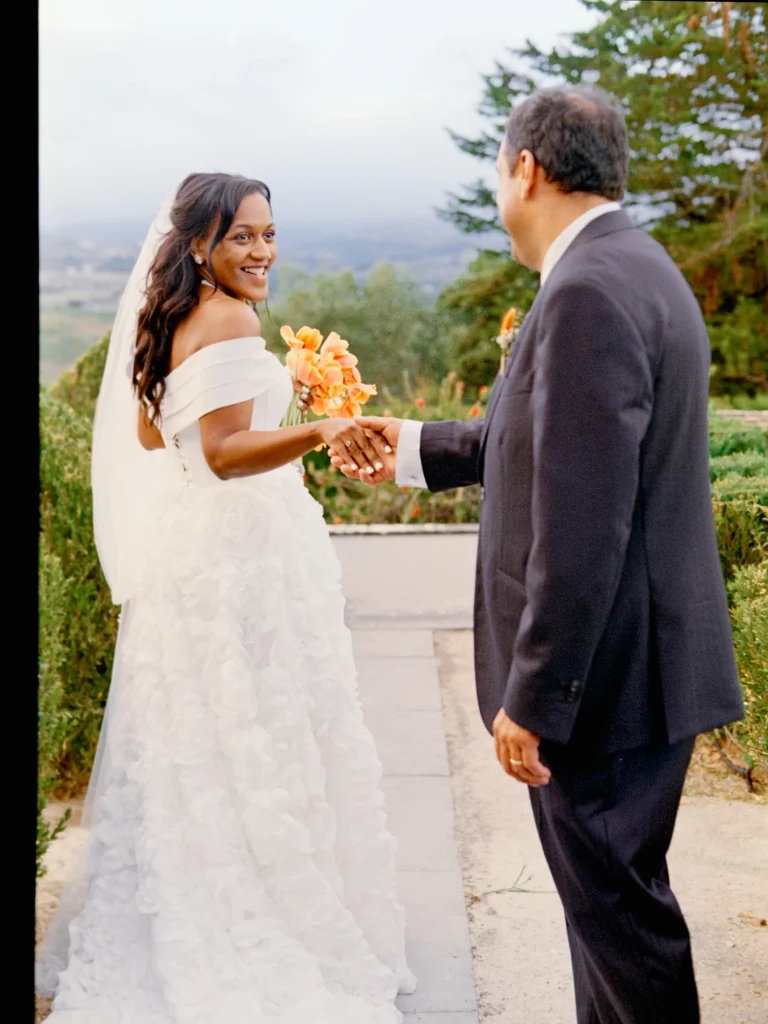
Film absorbs the harsh afternoon sun, keeping warm tones and details in the whites completely intact.
Every Frame: An Artistic Decision
The greatest benefit of including analogue in your wedding isn’t just the final visual style it brings to your gallery; it’s the shift in posture it demands from the photographer. Because each roll has a limited number of exposures, every frame is an artistic decision weighed with the utmost care.
It forces us to pause, observe, think, and, above all, feel what the final image will capture. It is the exact opposite of shooting in bursts, hoping a photo works. We wait for the exact gesture, the perfect light, and the real interaction. For the precise moment.
This slower, more conscious approach also helps us eliminate the natural anxiety that many couples feel in front of the camera. It naturally fosters a deeper, more grounded interaction between you and the lens.
To learn in detail how we integrate this format into your wedding day, explore our page dedicated to the film photography service.
Checking Availability for Your Date
Developing and scanning wedding film photography requires a lot of time.
That’s why we strictly limit the number of weddings we accept each season. This decision allows me to give the exclusive attention that each project demands, especially considering the time required for the artisanal development process in our studio. Our calendar for the summer months usually books up well in advance due to demand from couples traveling to Portugal.
If you value the truth of the analogue format and look for a calm photography experience focused on your real moments, head over to our contact page to share the details of your day and secure your date.
Curious to See the Soul of Wedding Analogue Film Photography?
The texture and color of the analogue process cannot be explained in words; they must be felt. In a quick conversation, we can show you real examples of mixed weddings (digital + film) so you can see the difference this format brings to your story.